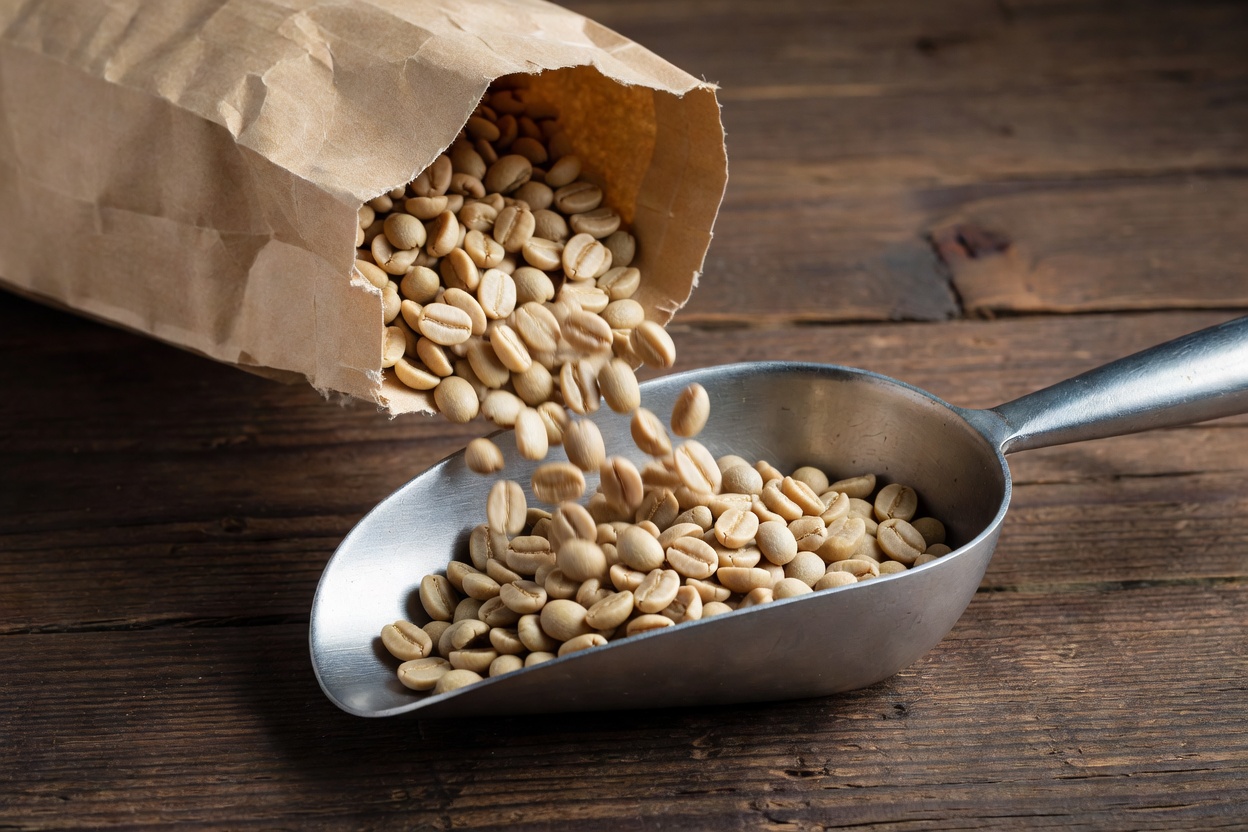
Where the beans come from
We work with a single micro-roaster in Årsta, ten minutes south of the studio, who roasts for us every Tuesday and Friday. Beans arrive within 48 hours of roasting, rest for a minimum of five days so the carbon dioxide can settle, and are used within fourteen days. Anything older goes into cold brew or the staff kitchen, never the hopper.
The house espresso is a blend: 70 per cent natural-process Brazil from the Mogiana region for body and cocoa sweetness, 30 per cent washed Ethiopian Guji for a lift of bergamot and stone fruit. It is roasted lighter than most espresso, which means it needs a precise recipe (below) but rewards it with a cup that tastes of the coffee rather than the roaster.
The filter coffee rotates monthly. In a typical year we cycle through a Kenyan AA in late winter, Colombian Huila through spring, Ethiopian Yirgacheffe in summer and a Guatemalan Huehuetenango in autumn. The current filter is chalked on the board above the brew bar, with origin, farm, process and altitude.
Brew methods compared
Five ways to brew the same beans produce five quite different cups. This is how each one is made at the studio and who tends to prefer it.
| Method | Recipe | Time | Character | Price |
|---|---|---|---|---|
| Espresso | 18 g in, 38 g out, 93 °C | 27–30 s | Dense, sweet, citrus finish | 38 SEK |
| Batch filter | 60 g per litre, paper filter | 5–6 min per batch | Clean, tea-like, refilled all morning | 42 SEK |
| Pour-over (V60) | 15 g to 250 g water, 94 °C | 3 min 30 s | Most aromatic, made to order | 55 SEK |
| Kokkaffe | Coarse grind boiled in a kettle, settled | 10 min | Rustic, full, slightly gritty, very Swedish | 40 SEK |
| Cold brew | 1:8 ratio, room temperature | 16 hours | Low acidity, chocolatey, served over ice | 52 SEK |
Strengths
- Batch filter is the best value and the most Swedish; bottomless refills before 10:00 on weekdays.
- Pour-over shows off the monthly single origin better than anything else we make.
- Kokkaffe is how coffee was drunk in every Swedish cabin for a century. Nostalgic, and surprisingly good with a cardamom bun.
Trade-offs
- Espresso from a light roast can taste sharp if you are used to Italian-style roasts. Ask for it as a cortado first.
- Pour-over takes four minutes and we make one at a time; expect a wait at 10:00.
- Cold brew is only on from May to September.
Milk and alternatives
Dairy is organic whole milk from a cooperative in Sörmland, delivered daily. We steam it to 60 °C, which is cooler than many cafés but keeps the sweetness. Our oat drink is a Swedish barista blend that foams properly for cappuccino and does not split in filter coffee. There is no surcharge for oat, and there never has been. We do not stock soy or almond; the oat drink does the job better and has a fraction of the water footprint.
Full price list
| Drink | Size | Price |
|---|---|---|
| Espresso / doppio | 38 g | 38 SEK |
| Cortado | 120 ml | 44 SEK |
| Cappuccino | 180 ml | 48 SEK |
| Flat white | 180 ml, double shot | 52 SEK |
| Latte | 300 ml | 52 SEK |
| Batch filter | 300 ml, refill 15 SEK | 42 SEK |
| Pour-over | 250 ml | 55 SEK |
| Kokkaffe | 300 ml | 40 SEK |
| Cold brew (May–Sep) | 350 ml over ice | 52 SEK |
| Hot chocolate | 300 ml, 62% dark | 50 SEK |
| Loose-leaf tea | Pot, 400 ml | 45 SEK |
| Morning fika deal | Any bun + bottomless batch filter, weekdays before 10:00 | 75 SEK |
Beans to take home
Everything we brew is on the shelf by the till. A 250 g bag of house espresso or the current filter is 145 SEK; a 1 kg bag is 480 SEK. We grind to order for espresso, moka pot, filter, French press or kokkaffe. The subscription is 129 SEK per 250 g bag, billed monthly, collected in the studio or posted anywhere in Sweden for a flat 49 SEK. Every bag carries the roast date on the label, not a best-before date; the rule of thumb is to open it between one and four weeks after roasting.
What should you order?
- First visit: a batch filter and a kardemummabulle. It is the most Swedish combination on the menu and costs 75 SEK before 10:00.
- If you like milk coffee: the cortado. Less milk than a flat white, so the light roast still shows.
- If you want to taste the single origin: the pour-over, black, no sugar, and give it a few minutes to cool.
- If you are curious: kokkaffe. Ask for it "med sockerbit" and you will be given a sugar cube to hold in your teeth while you sip, the old-fashioned way.
Want to learn to brew any of this at home? The Home Brewing Lab runs on Wednesday evenings.